VC Year-End Valuations: Reading the Evidence Behind the Numbers
 Hello, this is Treasurer.
What if a single portfolio company ended up with three different valuations?
One from the firm’s own assessment, one from an external valuation firm, and one from an LP re-valuing it by its own standards.
This year-end, many VCs may actually face this situation.
Valuations that differ slightly are not unusual in themselves.
The harder question comes next:
“Why are the numbers different?”
Being able to explain the standards and evidence behind that answer right away is becoming more important.
In December, valuation work changes for Korea Fund of Funds GPs

Source: InvestChosun
Korea Venture Investment Corp. (KVIC) has advised GPs managing Korea Fund of Funds sub-funds to carry out a fair value assessment through an external firm every December.
Twice-yearly assessments were originally considered, but the schedule was set to once a year in December given the cost and workload.
This year’s June assessment was done as before, using each firm’s own standards.
In other words, even within the same year, the firm’s own assessment and the external assessment can be made on different standards and at different points in time.
And when the two numbers differ, GPs face one more task:
explaining why the numbers changed.
Why can the same company get different valuations?

Source: Search Engine Journal
Private companies have no share price traded on the market every day, so their value is estimated using several methods.
One of them is the comparable listed company method, which references the value of similar public companies.
But even for the same company, the result can vary depending on
which companies were chosen as comparables, which point in time the data came from, and which assumptions were applied.
Comparable companies’ share prices move, earnings change every quarter, and securities registration statements and filings are newly issued or corrected.
So what matters more than the fact that the numbers changed is
whether you can explain which standards and which point-in-time data the numbers came from.
The real challenge is not making the number, but explaining it again

Source: CIO
- Which comparable companies were used in the last assessment
- Why those companies were chosen
- Which date the data was based on
- Which filings and materials were referenced
If this information is scattered across individual spreadsheets and documents, you have to search for it from scratch at the next assessment.
It gets even harder when the person in charge changes or a few months pass.
“Why did we use this company as a comparable last time?”
“As of what date is this number?”
When questions like these come up, you have to dig through past files and filings again.
What’s needed is not more complex calculations, but a system that carries the standards and evidence of the last assessment into the next one.
Connecting scattered valuation materials into one flow
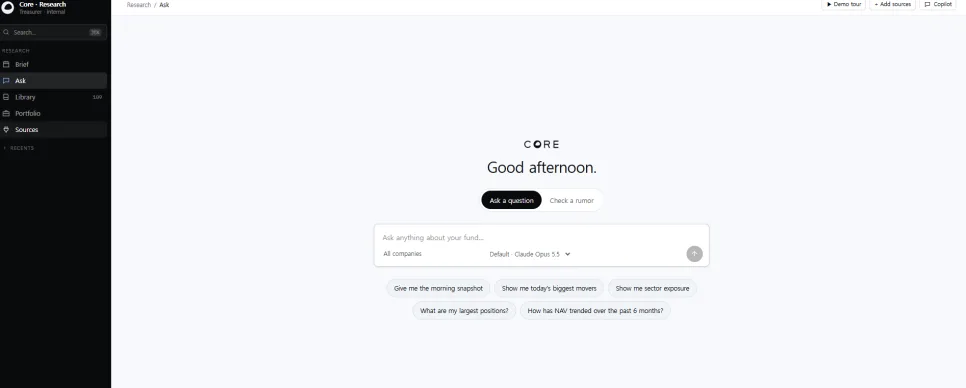
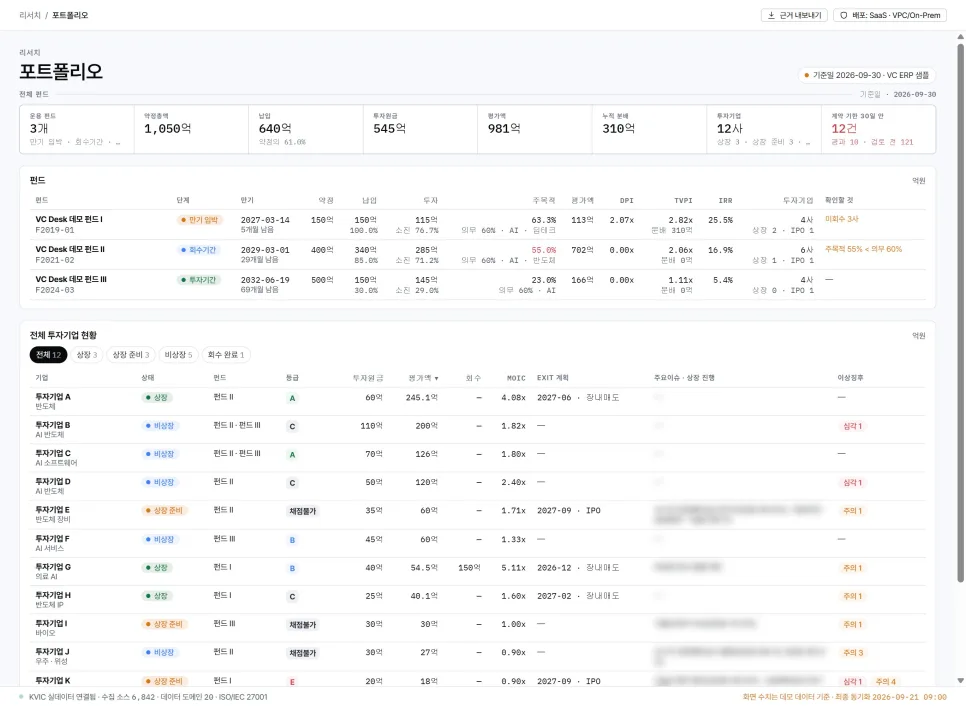
VC Portfolio demo screen
In Treasurer Core, you can see portfolio company information by fund, including invested amount, current valuation, MOIC, exit plans, and key issues, on a single screen.
For example, if a portfolio company’s valuation has changed, you don’t just look at the current number. You can link the company’s past valuation materials, filings, and research together to examine what drove the change.
When new earnings or filings come out, you can also compare them with the existing assessment to see what information changed and which point-in-time data it was based on.
So even when the external firm’s valuation and your own valuation differ,
you can check whether the comparable companies were different, whether the reference date was different, or which assumptions or market data caused the gap against your existing materials.
What matters is not making the valuations identical, but being able to explain, with evidence, why the numbers differ.
The last assessment becomes the starting point for the next
Fair value assessment is not a one-time task.
Portfolio companies’ earnings and market conditions keep changing, and events that affect company value, such as new funding rounds or IPOs, keep coming.
If you have to find past files and set new standards each time, the same work repeats.
On the other hand, if the comparables, standards, data dates, and evidence from the last assessment stay in one flow, the next assessment can pick up right from there.
Treasurer Core connects everything from investment status to valuation evidence and related materials, so you can keep managing recurring VC research and valuation work continuously.