The Number Every Investment Committe Dreads
 Hello, this is TREASURER.
What’s the most nerve-racking moment in an investment committee meeting?
It may not be the barrage of tough questions, but this one line:
“Where did this number come from?”
Today, we’ll look at the numbers investment committees dread most,
and how to build numbers they can trust.
3 Numbers ICs Dread

Source: Pinterest
1. Numbers with No Known Source
Market size, growth rates, peer margins.
If even the author can’t remember exactly where a number came from,
it can’t serve as the basis for a decision.
2. Numbers That Don’t Match
Revenue on page 3 differs from revenue on page 12.
The IR deck and the audit report show different figures.
The moment no one knows which is right, the entire report comes under suspicion.
3. Numbers with Hidden Assumptions
30% annual growth. Profitability in three years.
When the assumptions behind a number aren’t visible, the committee won’t trust the number itself.
Why Do These Numbers Happen?

Source:Pinterest
It’s not because associates are careless.
It’s mostly the structure that produces them, as below.
1. Copying figures by hand from multiple sources mixes up versions.
2. Under IC deadlines, there’s no time to check whether data is up to date.
3. There’s no record of who changed a number, or when.
The problem is that the process of producing numbers has no verification step.
What One Number Can Undo

Source:Pinterest
A single wrong number shakes more than you might expect.
The committee starts doubting not just that number but the whole report,
and the decision gets pushed to the next meeting.
Meanwhile, the deal’s timing slips, and trust in the associate wavers too.
Investment decisions are built on numbers.
When the numbers waver, so does the judgment.
What Makes a Number Trustworthy

Source:Pinterest
Numbers that make it through IC have a few things in common.
1. You can show where they came from, instantly
A number you can trace back to the original document on the spot leads to a decision, not a debate.
2. They’ve been cross-checked
A number that’s been checked for consistency across sources,
with any differences explained in advance, holds steady.
3. The assumptions are visible
Even an optimistic number works when its assumptions are clear.
The committee can then debate the assumptions constructively.
Numbers with Answers Ready Before the Question: CORE
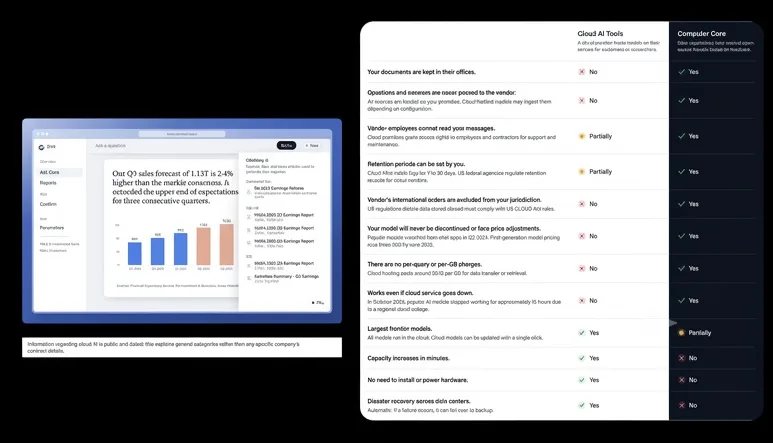
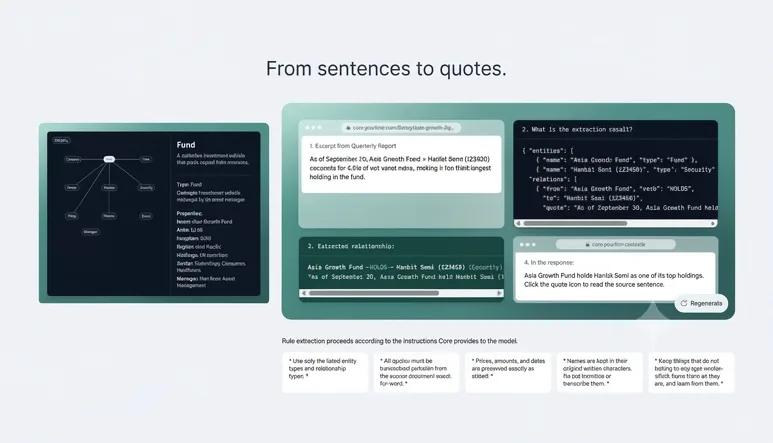
Source: TREASURER / Core website
CORE is a finance-specialized AI solution designed so that no number goes without a source.
· Built on source data: Every result comes from a financial ontology linked to source data, and can be verified in a single click.
· Cross-checked figures: Core flags where numbers differ across documents, so you can catch them before they reach the report.
· Automated report drafts: Upload your files, and Core drafts reports with every figure linked to its source.
· On-premise deployment: Core runs entirely within your internal network, so sensitive deal data never leaves the company.
“Where did this number come from?”
Now you can answer that question in a single click.