From a Month to a Day: VC·PE Now Run on AI
 Hello, this is Treasurer.
Would you believe it if there is a VC firm that returns a review of your business plan within 24 hours?
This isn’t happening overseas. It’s happening right now, in Korea.
Meanwhile, at many other firms, analysts are still flipping through IR decks and interview notes.
Same job. So why such a gap in speed?
Where does an analyst’s time actually go?
Source: AI generated image
An analyst’s real job is judgment.
Yet look closely at a typical day, and much of it is spent reading and organizing.
First, sourcing. You read through thousands of pitches just to find a handful of investable companies.
Second, due diligence. Once the data room opens: thousands of pages to review within a few weeks.
Third, institutional knowledge.
“Didn’t we look at a company like this before…?”
Past deal records, IC discussions, and portfolio data sit scattered across inboxes and shared drives, never to be used again. These are exactly the three areas AI is transforming first.
Already standard abroad, now taking hold in Korea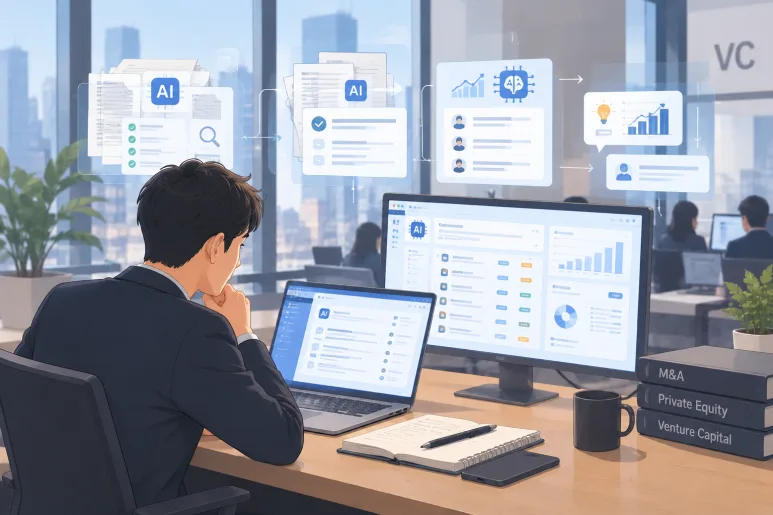
Source: AI generated image
In a Deloitte survey of 1,000 corporate and private equity leaders, 86% reported using
generative AI in their M&A workflows. Of those, 65% had adopted it within the past year.
McKinsey estimates that AI can cut deal process costs by roughly 20% and shorten timelines
by 10-30%. 67% of LPs believe AI adoption will widen the performance gap between GPs.
AI capability has become a question GPs now face in fundraising.
Korea is no exception.
Early-stage investor The Ventures has used AI to review more than 1,500 business plans
and now delivers review results within 24 hours of submission.
The AI’s screening results matched analysts’ final decisions about 90% of the time.
Other firms have adopted AI that learns each analyst’s investment preferences to recommend companies, or created dedicated roles such as “AI Partner.”
What can AI take over in due diligence?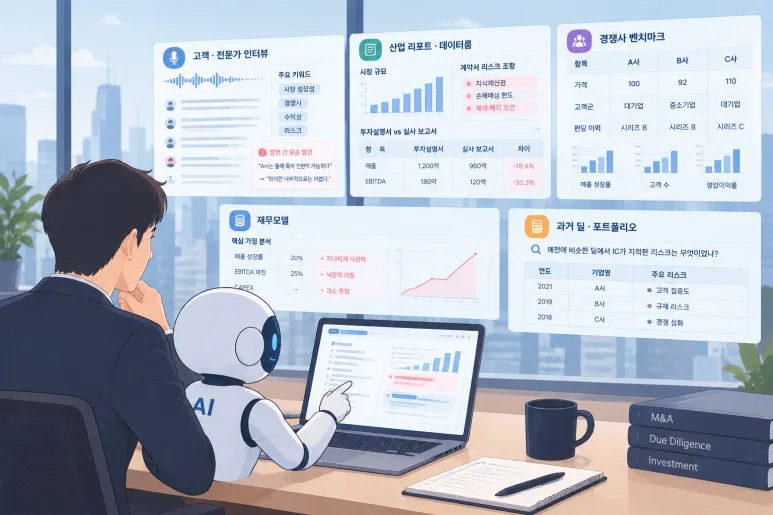
Source: AI generated image
Start with interviews. Even with dozens of customer and expert call transcripts,
AI can group them by theme and flag contradictions between what different interviewees said.
The same goes for industry reports and data rooms. AI extracts market sizing and risk provisions
in contracts, and flags figures that don’t reconcile between the CIM and the diligence report.
It also supports competitive benchmarking and financial model review.
It lines up competitors’ pricing, customer segments, and funding history on a like-for-like basis,
and surfaces the key assumptions buried in a financial model, along with any that look overly optimistic.
The biggest difference comes from leveraging historical data.
Ask “What risks did the IC raise on a similar deal in the past?” and it answers from your firm’s own data.
So why do so many firms stall at the pilot stage?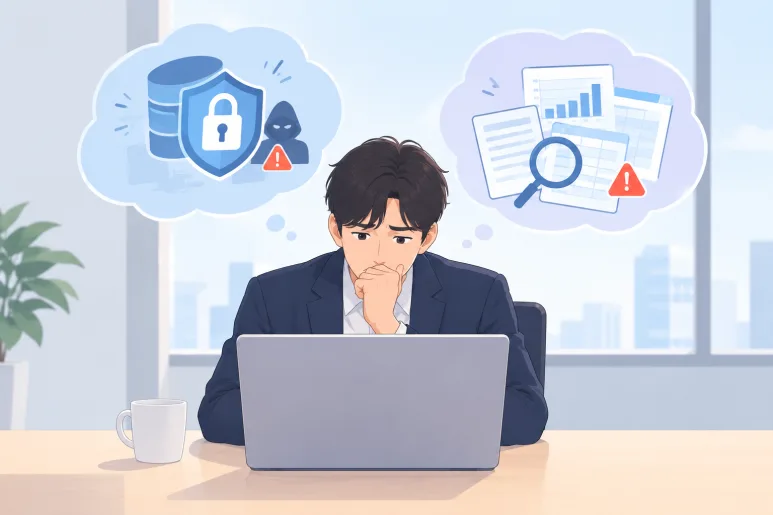
Source: AI generated image
Anyone can use an LLM, but only your firm has your past deals and portfolio data.
The moment you connect that data to AI, it stops being a generic chatbot and
becomes an analytical tool that understands your investment criteria.
That’s where the challenge begins.
In the Deloitte survey, the biggest barriers to AI adoption were data security and data quality.
Without a framework to handle sensitive deal information securely and consolidate scattered data, even firms that buy the tools tend to stall at the pilot stage.
The problem is especially acute in private-market investing.
However, when firms consider AI, they worry about sensitive deal data leaving the building,
while general-purpose AI knows little about private companies.
Start AX without worrying about your data: Treasurer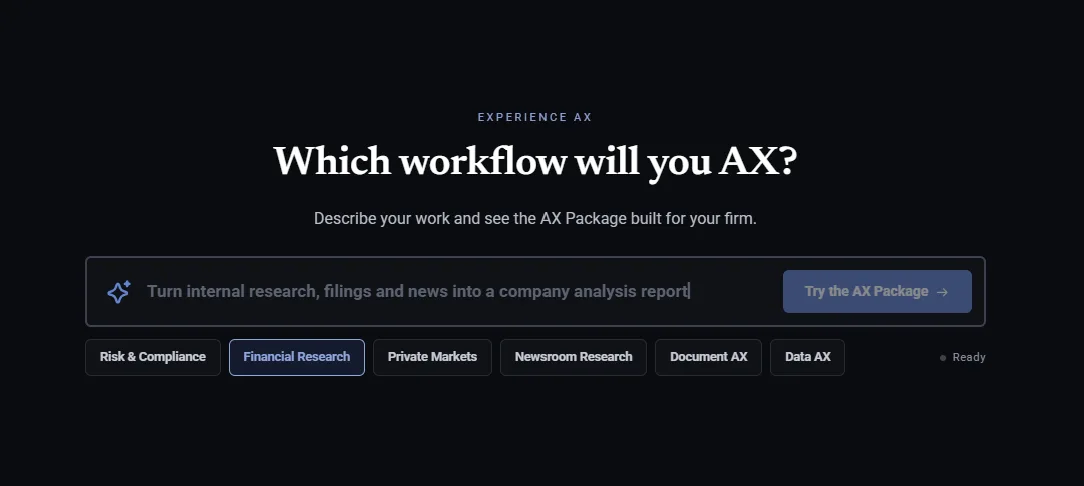
Source: Treasurer Homepage
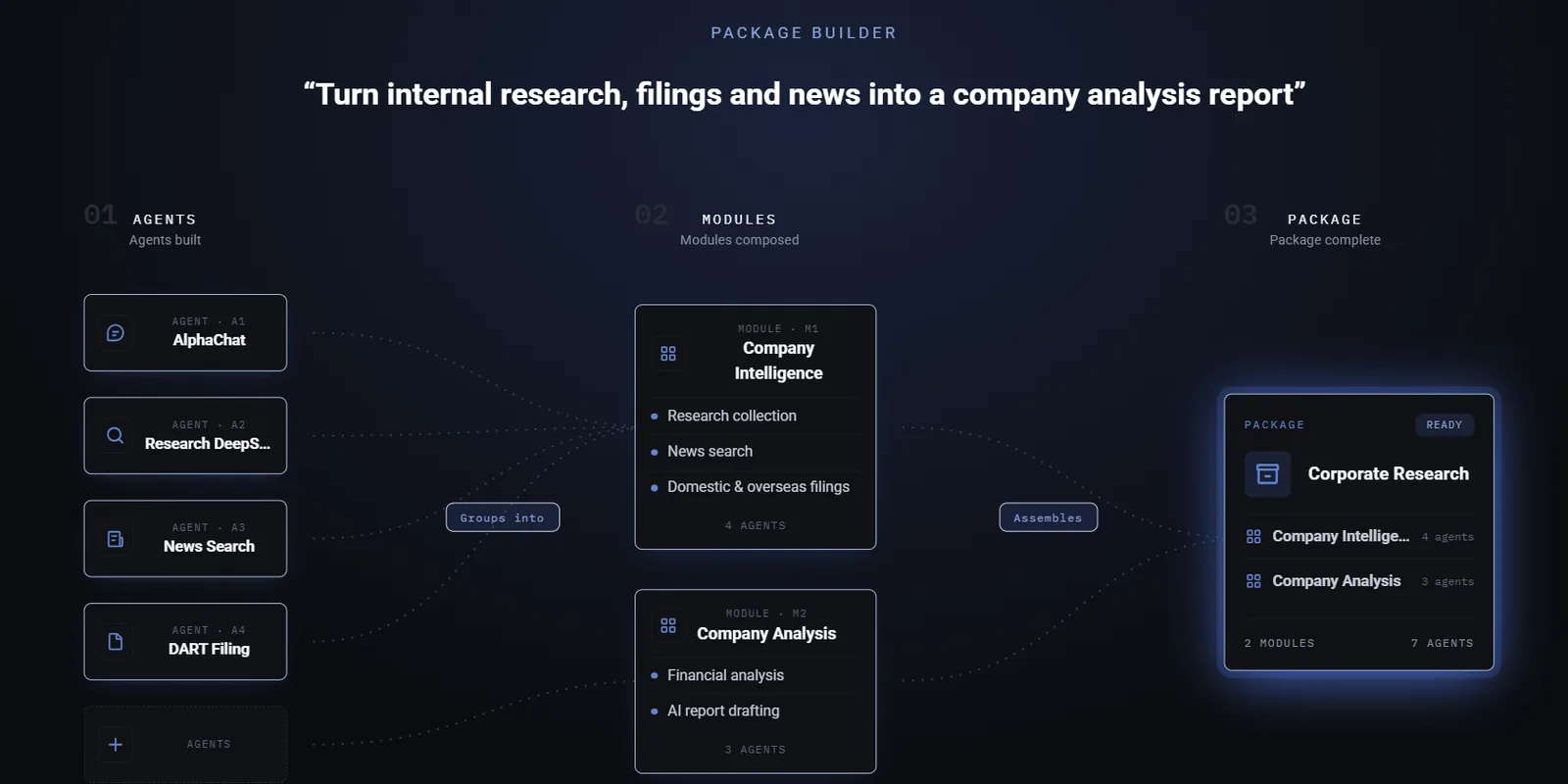
Treasurer offers a private-market investment AX package designed from the ground up to
solve exactly these two problems: data and security.
AI gathers the data. Analysts make the call.
We collect and refine source data, from registry filings and audit reports to news, and map it into a financial ontology. Connect your past deals and portfolio data, and it learns your investment criteria.
Your data never leaves your firm.
Treasurer runs inside your network via Private VPC and network separation.
Every output is cross-verified against its sources, so every number is traceable.
How the review process changes
From sourcing to company analysis and IC-ready Investment Memos, it all runs in one workflow, plus due diligence, valuation, and portfolio monitoring.
After your first workflow, the next one is 10x faster.
Reusable modules and ontology mean each new workflow deploys up to 10x faster. AX becomes a compounding asset, not a one-off project. NH Investment & Securities, Mirae Asset Securities, Shinhan Venture Investment, and The Bell already work with Treasurer.