Why Insurance Is Leading the AX Era

Hello, this is Treasurer.
Generative AI is rapidly transforming the way the financial industry operates. From banking and securities to asset management, financial institutions are accelerating AI adoption to improve efficiency and reshape the way work gets done. The insurance industry is no exception.
Many people think of insurance companies simply as businesses that sell insurance products. In reality, however, their core mission goes far beyond sales. At its heart, insurance is about predicting, assessing, and managing future risk.
Every day, insurers analyze countless variables—from the likelihood of an accident occurring and the appropriate premium to charge, to whether an insurance claim is legitimate. These continuous assessments form the foundation of every underwriting and claims decision.
Because insurance relies on processing vast amounts of data to make informed decisions, it has become one of the industries best positioned to benefit from AI.
This is precisely why AX (AI Transformation) has emerged as one of the most important strategic priorities across the insurance sector today.
Insurance Companies Are Data Companies First
 Source: Kyunghyang Shinmun
Far more data goes into issuing an insurance policy than most people realize.
Take auto insurance as an example.
When evaluating a policy application, insurers don't simply look at the type of vehicle. Instead, they assess a wide range of data points, including:
- Driving history
- Accident records
- Age
- Place of residence
- Vehicle information
- Primary vehicle usage
- Previous insurance claims
By analyzing these variables together, insurers estimate the likelihood of future accidents and calculate the expected loss ratio, allowing them to determine appropriate pricing and underwriting decisions.
 Source: Korea Medical Communication
Health insurance follows the same principle.
Insurers evaluate an applicant's risk profile using a wide range of information, including age, medical history, health screening results, and lifestyle factors. Based on this analysis, they determine both the level of risk and the appropriate insurance premium.
In other words, insurance is fundamentally a business of predicting future risk and pricing it using data.
The challenge is that the volume of data insurers must process continues to grow exponentially every year.
Beyond customer information, insurers now need to consider medical records, climate data, natural disaster trends, macroeconomic indicators, regulatory changes, and developments across global financial markets.
As a result, competitive advantage no longer comes from simply having access to more data.
It comes from the ability to analyze the right data quickly and accurately—and turn those insights into better decisions.
Before AX, Insurance Operations Were Largely Manual
 Source: Deloitte
Before AI became widely integrated into the insurance industry, many core insurance processes relied heavily on human expertise and manual workflows.
One of the best examples is underwriting—the process of determining whether to approve an insurance application and under what terms.
Underwriters manually reviewed application documents, examining medical histories, accident records, occupations, and other risk factors one by one before determining an appropriate premium.
The claims process followed a similar approach.
When a claim was submitted, claims adjusters reviewed medical certificates, receipts, and accident-related documentation, compared them against policy terms, and determined whether the claim should be approved.
Cases suspected of fraud often required additional investigation, while more complex claims naturally resulted in longer review cycles.
Although this process depended on a high level of professional expertise, it also had clear limitations. It was time-intensive, labor-intensive, and difficult to scale as the volume of cases continued to grow.
How Is AX Transforming Insurance Operations?
The core objective of AX is not to replace people with AI.
Instead, it is about redesigning workflows so that AI handles repetitive data processing and analysis, while people focus on higher-value tasks such as critical thinking, decision-making, and strategic judgment.
Across the insurance industry, this transformation is already taking shape in a wide range of business functions.
 Source: Aju Business Daily
① Underwriting
Traditionally, underwriters manually reviewed application documents and assessed potential risk factors before making a decision.
Today, AI can automatically digitize documents using Optical Character Recognition (OCR), extract key information, and analyze risk profiles before the review process even begins.
Instead of spending time on repetitive document analysis, underwriters can focus on what matters most—making informed decisions based on AI-generated insights.
 Source: Yonhap News Agency
② Claims Processing
AI is also significantly reducing repetitive work throughout the claims process.
It can automatically classify claim documents, extract relevant information, compare new claims with historical cases, detect potential anomalies, and prioritize cases that require further review.
By automating these time-consuming tasks, AI not only accelerates claims processing but also improves operational efficiency, allowing claims professionals to focus on more complex cases and final decision-making.
 Source: Tax & Financial News
③ Customer Service & Policy Assistance
Generative AI is rapidly transforming customer service operations across the insurance industry.
When customers have questions about insurance products, policy terms, or the claims process, AI can instantly retrieve relevant information and provide accurate guidance.
This allows customer service representatives to spend less time answering routine inquiries and more time focusing on complex cases and personalized customer support.
 ④ Risk Analysis & Decision-Making
For insurance companies, one of the highest priorities is accurately predicting future risk.
Changes in interest rates, natural disasters, rising healthcare costs, and regulatory developments all have a direct impact on an insurer's profitability and long-term performance.
AI enables insurers to rapidly analyze massive volumes of data, identify meaningful patterns and relationships, and gain a deeper understanding of potential risks. As a result, it has become an essential tool for accelerating and improving decision-making across the organization.
Ultimately, AX is not simply about introducing another AI solution. It is about fundamentally transforming how insurance companies interpret data, assess risk, and make business decisions.
How Are Insurers Putting AX into Practice?
 Source: News Today
AX is no longer a vision for the future—it is already reshaping the insurance industry.
Leading insurers around the world are launching initiatives that combine generative AI with advanced data analytics to improve operational efficiency and enhance the quality of business decisions.
Globally, insurance companies are integrating AI across the entire insurance value chain, including underwriting, claims processing, customer service, and enterprise knowledge management.
For example, AXA is leveraging generative AI to enhance internal document search and employee productivity, while Zurich Insurance is expanding the use of AI across customer service and business process automation.
Korean insurers are accelerating their AI adoption as well.
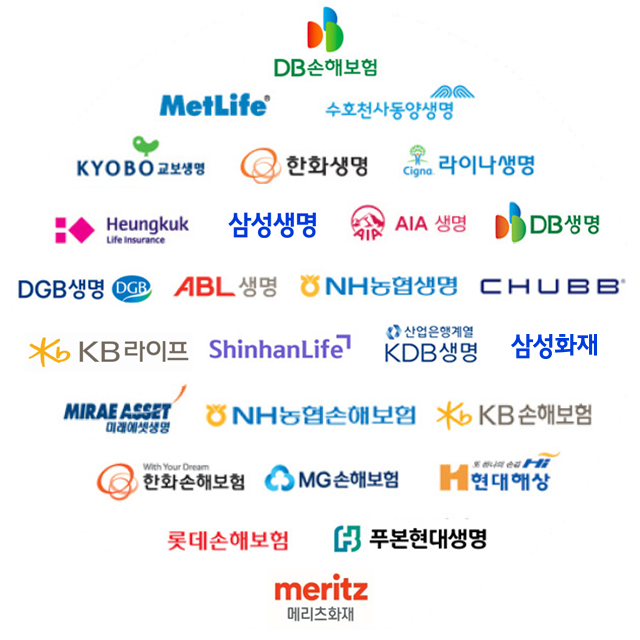
Major insurance companies such as Samsung Life Insurance and DB Insurance are expanding AI applications across a wide range of functions, including Optical Character Recognition (OCR), AI-powered customer support, claims processing assistance, and automated document classification.
What these initiatives have in common is a clear objective: AI is not replacing people—it is enabling people to make faster, smarter, and more informed decisions.
As a result, competition in the insurance industry is no longer defined solely by products or pricing. Increasingly, it is becoming a competition driven by data and decision-making.
Beyond PoC: What Matters Now Is Real Adoption
 Source: LinkedIn
Over the past few years, organizations across industries have invested heavily in AI Proofs of Concept (PoCs).
Companies have experimented with new AI models and launched pilot projects to test AI in selected business functions at an unprecedented pace.
However, a successful PoC does not automatically translate into successful AX.
The reason many AI initiatives fail to deliver long-term value is straightforward.
In many cases, organizations simply add AI to existing workflows without redesigning them, or they fail to create an environment where AI can be seamlessly integrated into day-to-day operations.
The insurance industry is no exception.
Applying AI to individual functions—such as underwriting, claims processing, risk management, or customer service—is only the first step.
The real challenge is embedding AI into the entire workflow so that it naturally supports day-to-day operations, reduces repetitive information processing, and enables faster, higher-quality decision-making.
Ultimately, AX is not a project about adopting new technology—it is a transformation of how an organization works.
In the AX Era, Competitive Advantage Comes from Faster Insights
 Source: Korea Insurance Newspaper
Insurance companies analyze an enormous amount of information every day.
Changes in interest rates affect investment returns. Natural disasters influence loss ratios. Government regulations and policy changes shape product strategies.
On top of that, insurers must continuously monitor rising healthcare costs, global economic conditions, developments in the reinsurance market, and broader industry trends.
The challenge is that none of these factors exist in isolation.
A single regulatory change can influence premium pricing. Natural disasters can affect both reinsurance costs and claims ratios. Interest rate movements impact not only investment performance but also capital management and solvency.
Understanding these interconnected relationships in real time is an increasingly difficult task for human analysts alone.
This is where AlphaLenz plays a critical role.

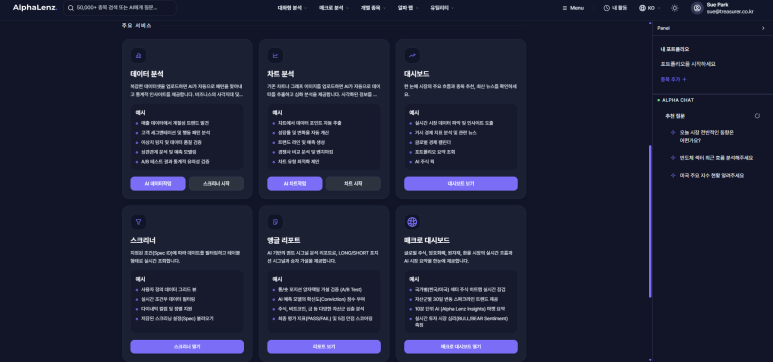
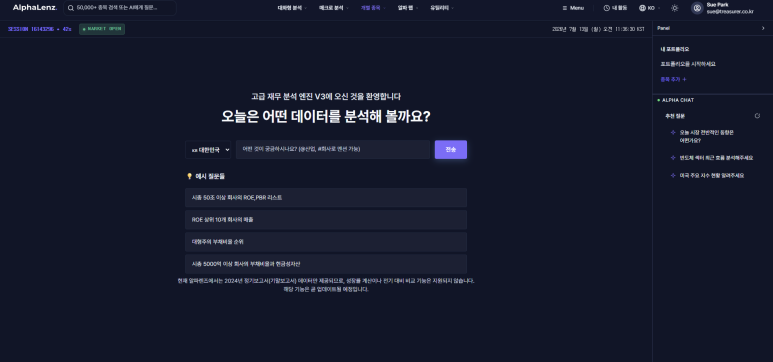 AlphaLenz is an AI-powered financial research platform that connects corporate filings, market news, industry developments, and policy updates into a single, unified research workflow—helping users identify the insights that matter, faster.
For example, insurance professionals no longer need to search separately for interest rate updates, insurance regulations, global reinsurance trends, and earnings reports from major insurers. With AlphaLenz, these related data points are connected into a single research flow, making it easier to understand not just what is happening, but why it matters.
The value of AlphaLenz goes beyond providing access to information. It delivers the context needed to make faster, more informed decisions.
In the AX era, competitive advantage is no longer determined by how much data an organization possesses. It depends on how quickly that data can be connected, interpreted, and transformed into actionable insights.
That is precisely why the insurance industry is embracing AX.
AI is not a replacement for insurance professionals—it is a tool that empowers them to make better decisions.
As the industry continues to evolve, the ability to make faster, smarter, and more accurate decisions will become one of the defining competitive advantages for insurers in the age of AX.