Why Do F1 Drivers Wear Multi-Million-Dollar Watches?
Did you catch the news? Lewis Hamilton claimed his first victory with Ferrari at the 2026 Spanish Grand Prix this June.
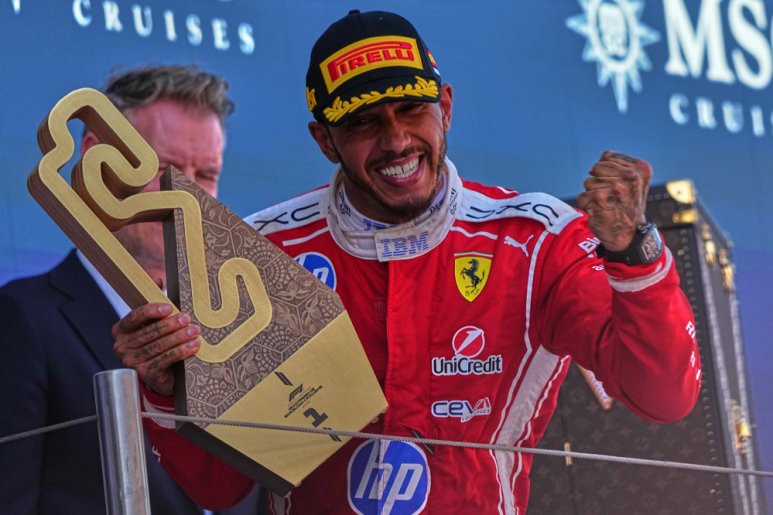 Source: Etoday
Hamilton's long-awaited victory made headlines around the world, drawing the attention of Formula 1 fans once again.
But it wasn't just the race that caught people's eyes.
Many fans also noticed the luxury watches worn by Hamilton and other F1 drivers.
World-renowned watchmakers such as TAG Heuer, Richard Mille, IWC Schaffhausen, and Breitling have maintained close partnerships with Formula 1 for decades.
Even more interestingly, some of these F1 collaboration watches have evolved beyond simple sports merchandise. Over time, certain limited-edition models have gained significant recognition and value among collectors.
Today, we'll take a closer look at the luxury watches worn by F1 drivers—and explore why some of these timepieces continue to appreciate in value long after they are released.
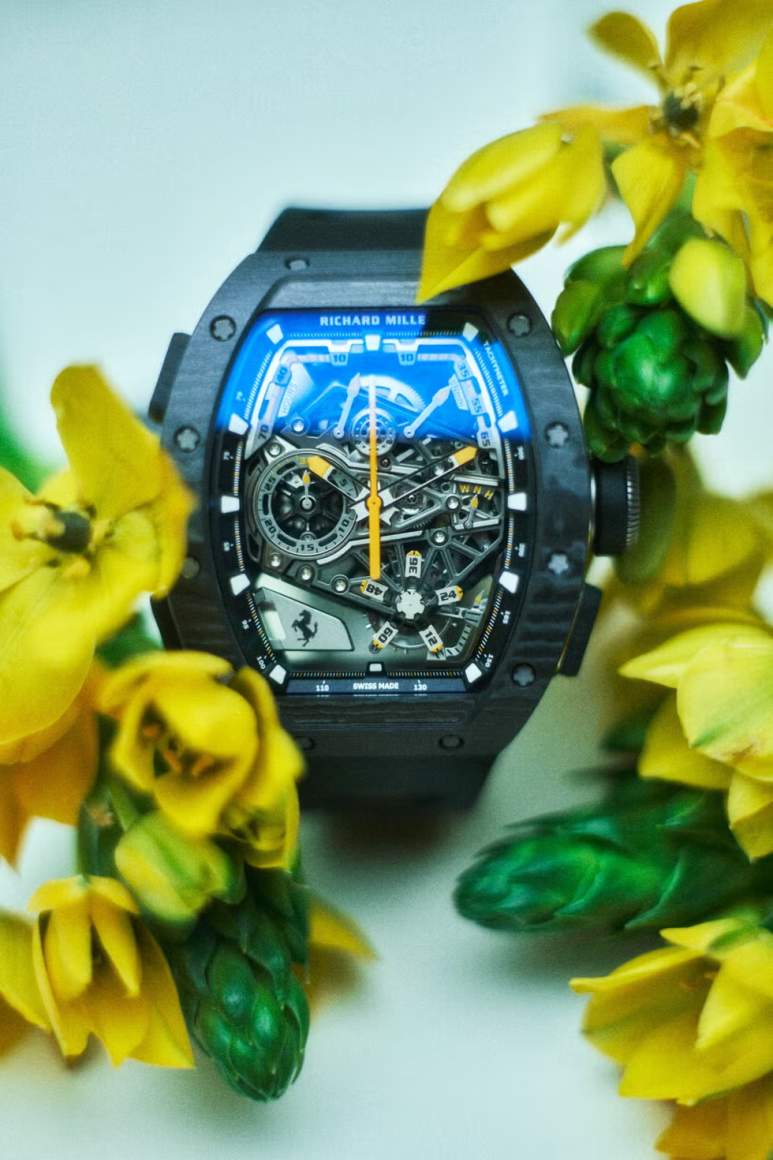 *Lewis Hamilton wearing the Richard Mille RM 43-01 Ferrari. Limited to just 150 pieces, the watch launched with a retail price of approximately $1.3–1.53 million (around KRW 2.0–2.4 billion). As of June 29, 2026, some examples have been valued at around $2.5 million on the secondary market. (Exchange rate as of June 29, 2026.)
Why Are Formula 1 and Luxury Watches So Closely Connected?
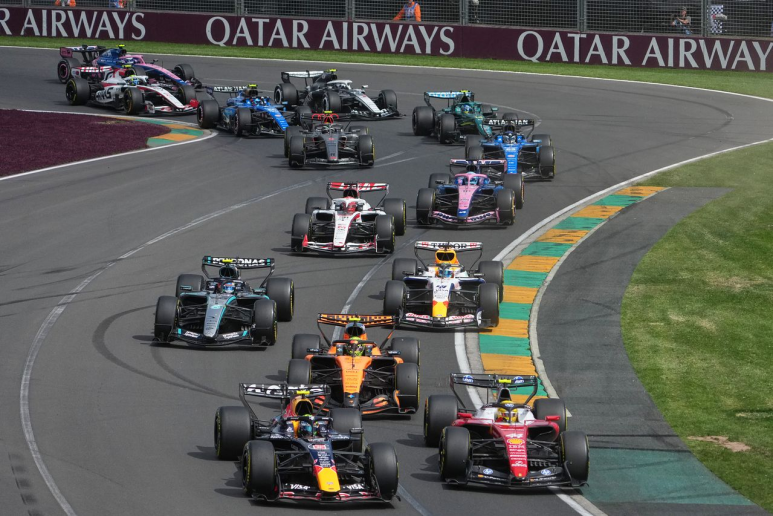 Source: JoongAng Ilbo
In Formula 1, races can be decided by as little as one-thousandth of a second.
That makes precision timing and cutting-edge engineering essential to the sport.
This emphasis on precision is one of the main reasons why many of the world's leading luxury watch brands have maintained close ties with Formula 1 for decades.
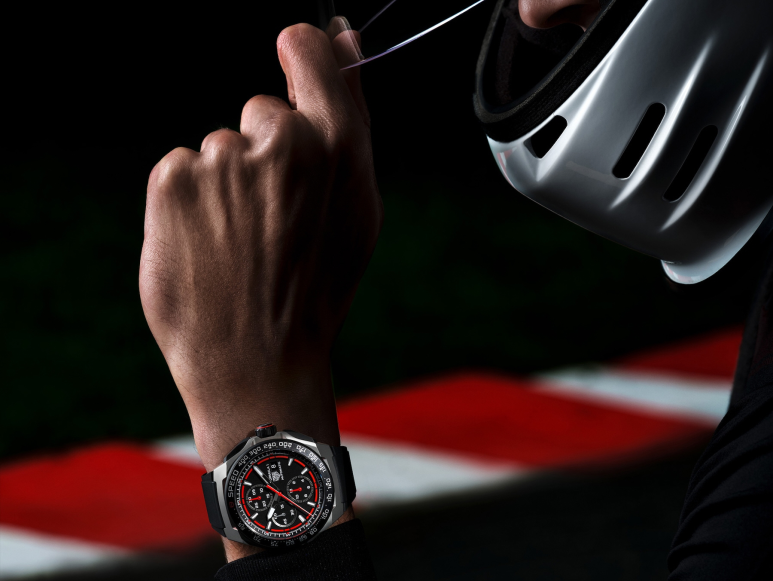
Beginning in 2025, TAG Heuer once again became Formula 1's Official Timekeeper, reinforcing its long-standing relationship with the sport.
For luxury watchmakers, Formula 1 provides the perfect stage to showcase the values at the heart of their brands: precision, innovation, and engineering excellence.
Why Are Luxury Watch Brands Drawn to Formula 1?
In recent years, Formula 1 has evolved beyond a motorsport into one of the world's premier luxury sports properties.
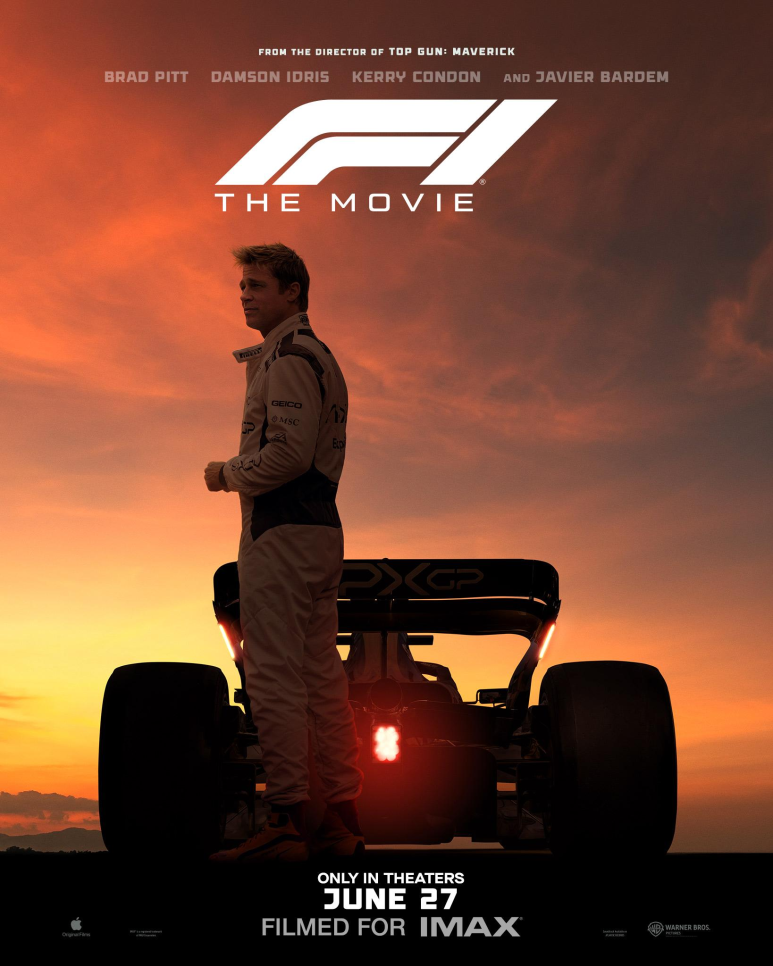
Following the success of F1 The Movie, the sport has attracted a new generation of fans. With its global audience continuing to grow, Formula 1 has become an increasingly valuable marketing platform for premium brands.
As the sport's popularity rises, competition among luxury watchmakers has become more intense than ever.
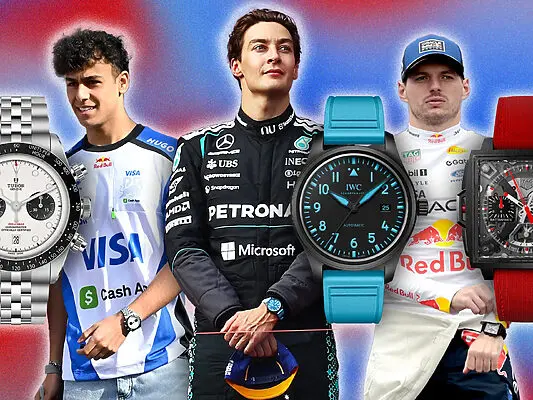
Today, many Formula 1 teams have official watch partners, with leading luxury brands competing for visibility on and off the track.
Some of the most notable partnerships include:
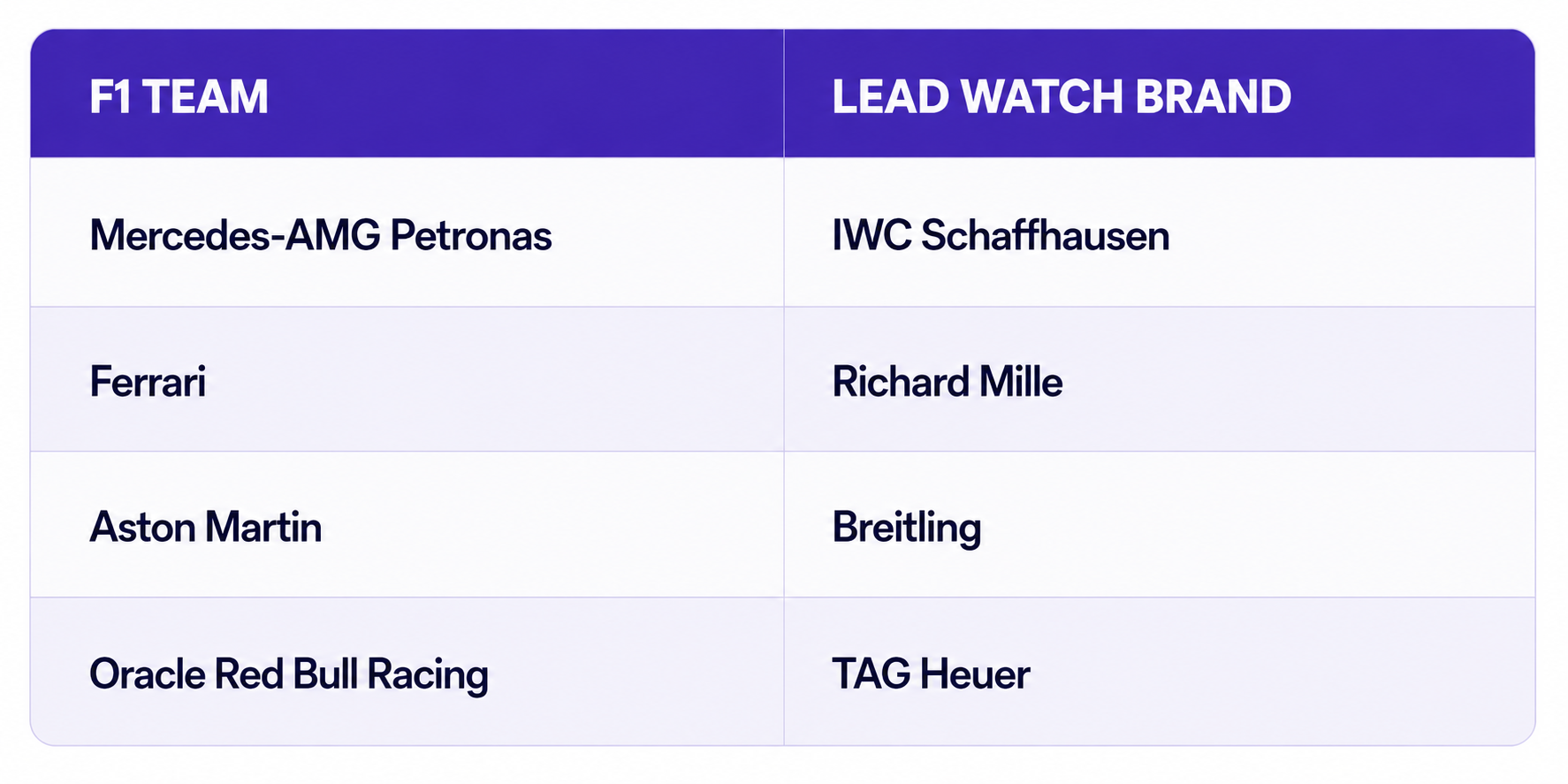
These partnerships go far beyond simply placing a logo on a race car.
Luxury watch brands work closely with Formula 1 teams to launch limited-edition timepieces, collaborate with drivers, and create exclusive collections that reflect the sport's spirit of innovation and precision.
In doing so, they strengthen not only their own brand image but also the technological identity and prestige of the teams they partner with.
F1 Watches Are More Than Just Sponsorships
Many people assume that luxury watch brands appear in Formula 1 simply for advertising exposure.
In reality, the relationship runs much deeper.
An F1 car is one of the most sophisticated engineering achievements in the world, built from tens of thousands of precisely engineered components working together as a single machine.
Luxury mechanical watches are remarkably similar. Although much smaller in scale, they rely on hundreds of meticulously crafted parts working in perfect harmony to keep accurate time.
In other words, both industries are built on the same core values:
- Precision
- Engineering Excellence
- Performance
- Craftsmanship
That's why luxury watch brands see Formula 1 as much more than a sponsorship opportunity. It provides the perfect stage to demonstrate the engineering, innovation, and philosophy that define their brands.
Why Do Some F1 Watches Increase in Value Over Time?
Source: GQ Korea
Not every luxury watch becomes more valuable over time.
However, certain models continue to earn strong recognition and command higher prices years after their release.
There are three main reasons why.
1. Limited Production
Many Formula 1 collaboration watches are produced in limited quantities, making them significantly rarer than standard models.
The fewer pieces available, the greater their scarcity—often increasing their appeal among collectors.
2. Motorsport Heritage
Formula 1 has been the pinnacle of motorsport for more than 70 years.
Watches created in partnership with iconic teams or legendary drivers often carry historical significance, making them more desirable as time passes.
3. Consistent Collector Demand
Rare models continue to be actively traded in the global pre-owned luxury watch market.
Limited editions and discontinued models, in particular, often benefit from constrained supply while collector demand remains strong, helping support their long-term value.
Why Are Some F1 Watches Catching Investors' Attention?
 Source: JoongAng Ilbo
In recent years, more people have begun viewing luxury watches not simply as consumer goods, but as tangible assets with long-term value.
Of course, not every watch appreciates over time.
However, limited-edition models and timepieces associated with globally recognized motorsports such as Formula 1 have consistently attracted the attention of collectors as the years go by.
Brands including Richard Mille, TAG Heuer, Rolex, and Patek Philippe have seen some of their rare models continue to trade actively in the global pre-owned and auction markets.
Ultimately, a watch's long-term value is determined by far more than its brand name alone. It is shaped by a combination of four key factors:
- Scarcity
- Brand Heritage
- Technical Excellence
- Collector Demand
Together, these elements help explain why certain luxury watches continue to stand out in the market long after their original release.
Are Luxury Watches a Consumer Good or an Asset?
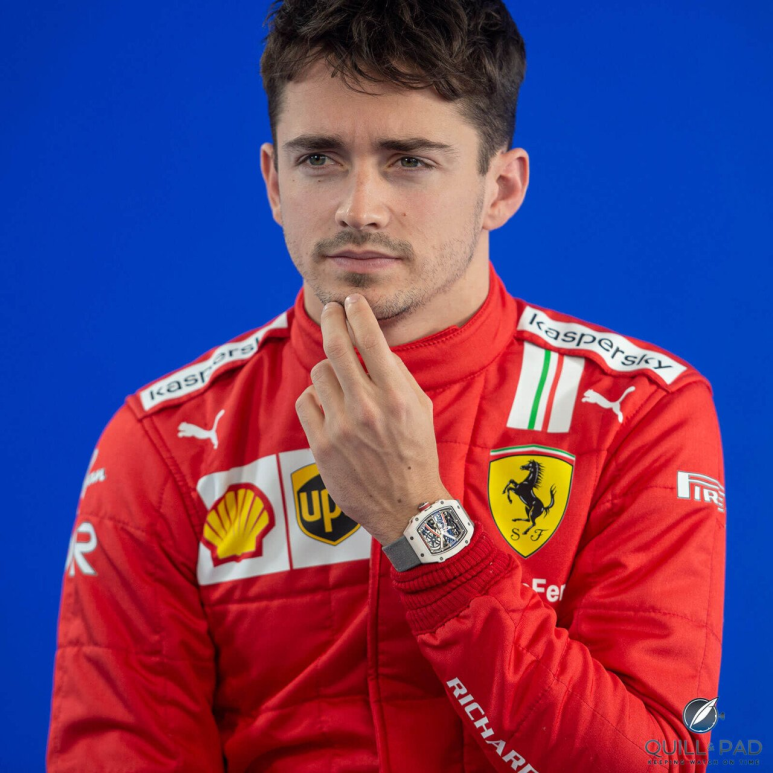 Source: FM Korea
At their core, watches are consumer products designed to tell time.
However, not every consumer product retains—or increases—its value over time.
Certain luxury watches have gained recognition as collectible assets, thanks to a combination of rarity, brand heritage, and limited production.
In fact, some rare models from brands such as Rolex, Richard Mille, and Patek Philippe have sold for millions of dollars at international auctions, attracting strong interest from collectors around the world.
That said, it's important to view these watches from the perspective of long-term value preservation rather than short-term price gains.
Not every luxury watch becomes more valuable, but for select pieces with enduring demand and historical significance, time itself can become part of what makes them so valuable.
So... How Much Does It Cost?
 Source: Noblesse
Some luxury watches don't just cost as much as a car—they can be worth as much as a home.
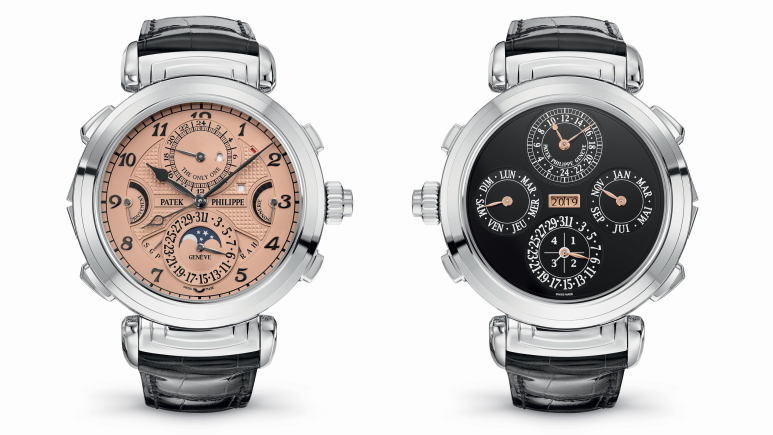
One of the best-known examples is the Patek Philippe Grandmaster Chime Ref. 6300A-010.
At the 2019 Only Watch charity auction, this unique timepiece sold for CHF 31 million (approximately US$33.65 million at the time, or roughly KRW 52 billion at current exchange rates), making it the most expensive wristwatch ever sold at auction.
Its record-breaking price was driven by two key factors: it is the only one ever produced, and it showcases some of the finest watchmaking craftsmanship and technical expertise that Patek Philippe has to offer.
This extraordinary sale demonstrates how rarity, heritage, and exceptional craftsmanship can elevate certain timepieces far beyond their original purpose as luxury consumer goods.
 Source: GQ
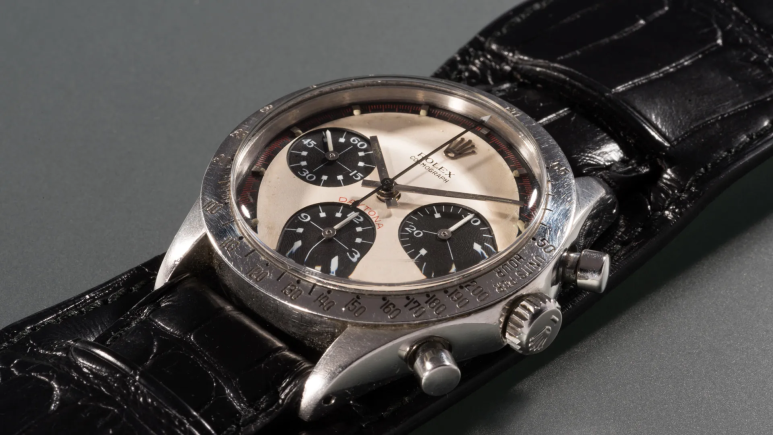
Another iconic example is the Rolex "Paul Newman" Daytona.
Originally worn by actor and amateur racing driver Paul Newman, this legendary timepiece sold for approximately US$17.75 million at auction in 2017 (roughly KRW 27 billion at current exchange rates).
Its extraordinary value comes from far more than the Rolex name alone. The watch's direct connection to Paul Newman, its remarkable story, and its exceptional rarity have made it one of the most celebrated collector's watches in history.
Of course, not every luxury watch reaches this level of value.
However, when scarcity, heritage, technical craftsmanship, and a compelling story come together, certain timepieces can transcend their role as luxury consumer goods and become highly sought-after collectible assets over time.
Luxury Watches, Now in a New Way
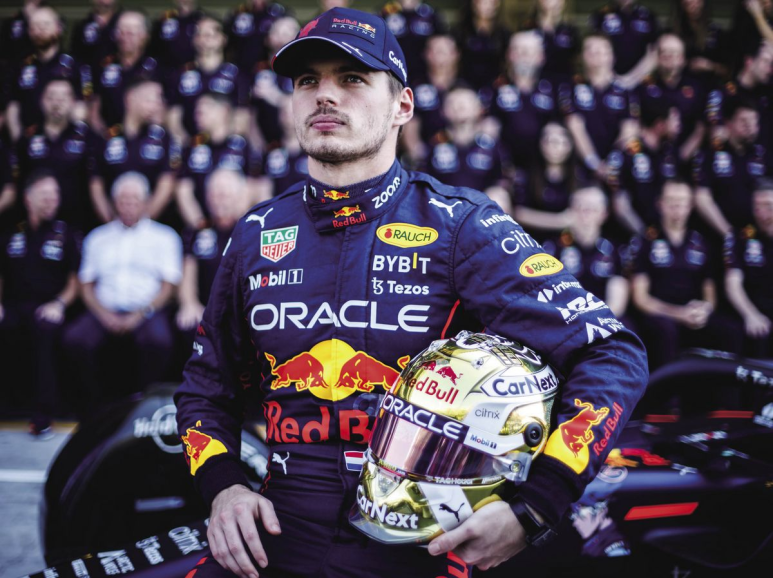 Source: Esquire Korea
As we've seen, luxury watches can range in price from a few thousand dollars to tens of millions.
In particular, highly sought-after limited-edition models often reach price levels that are beyond the reach of most consumers.
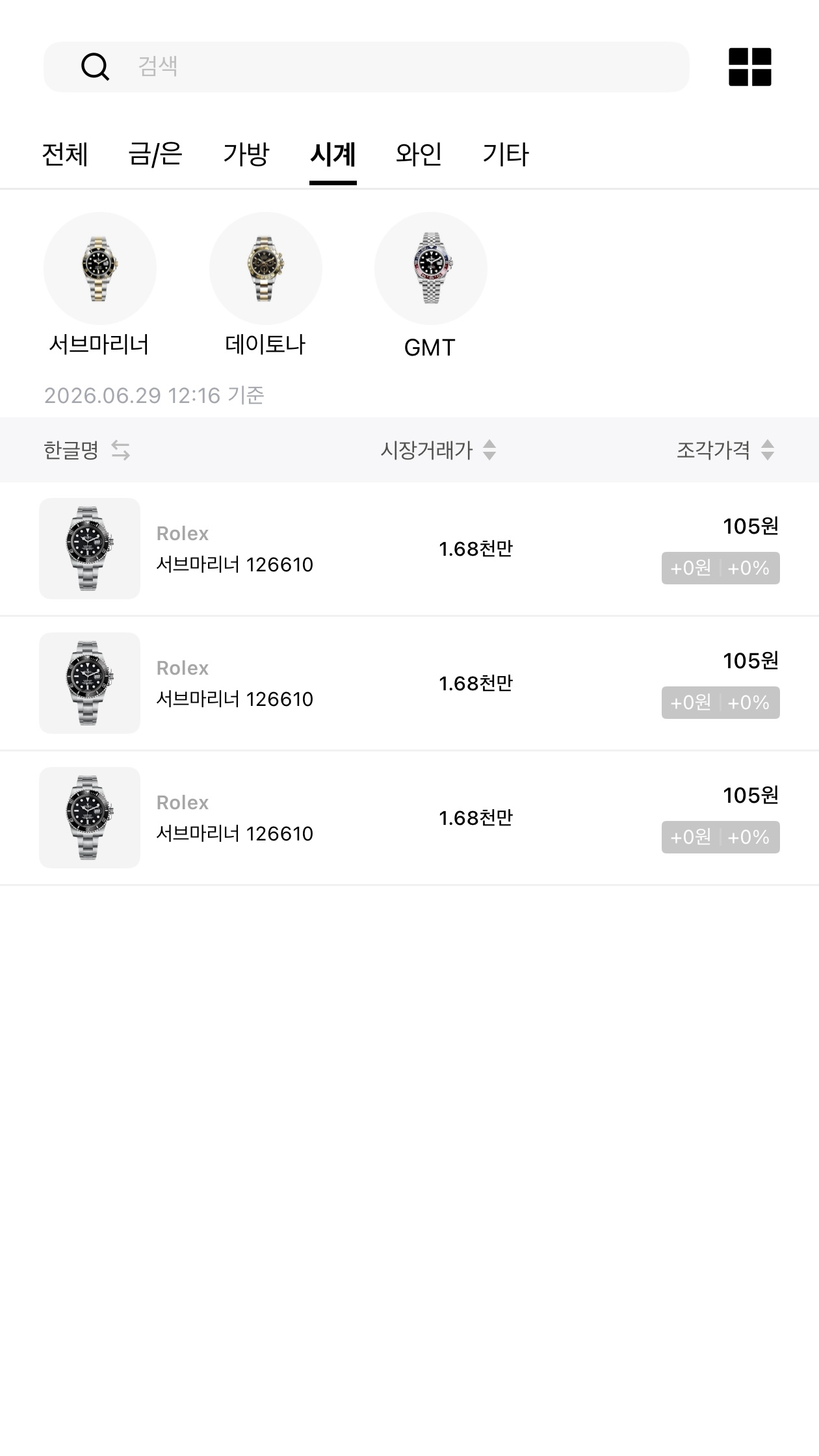
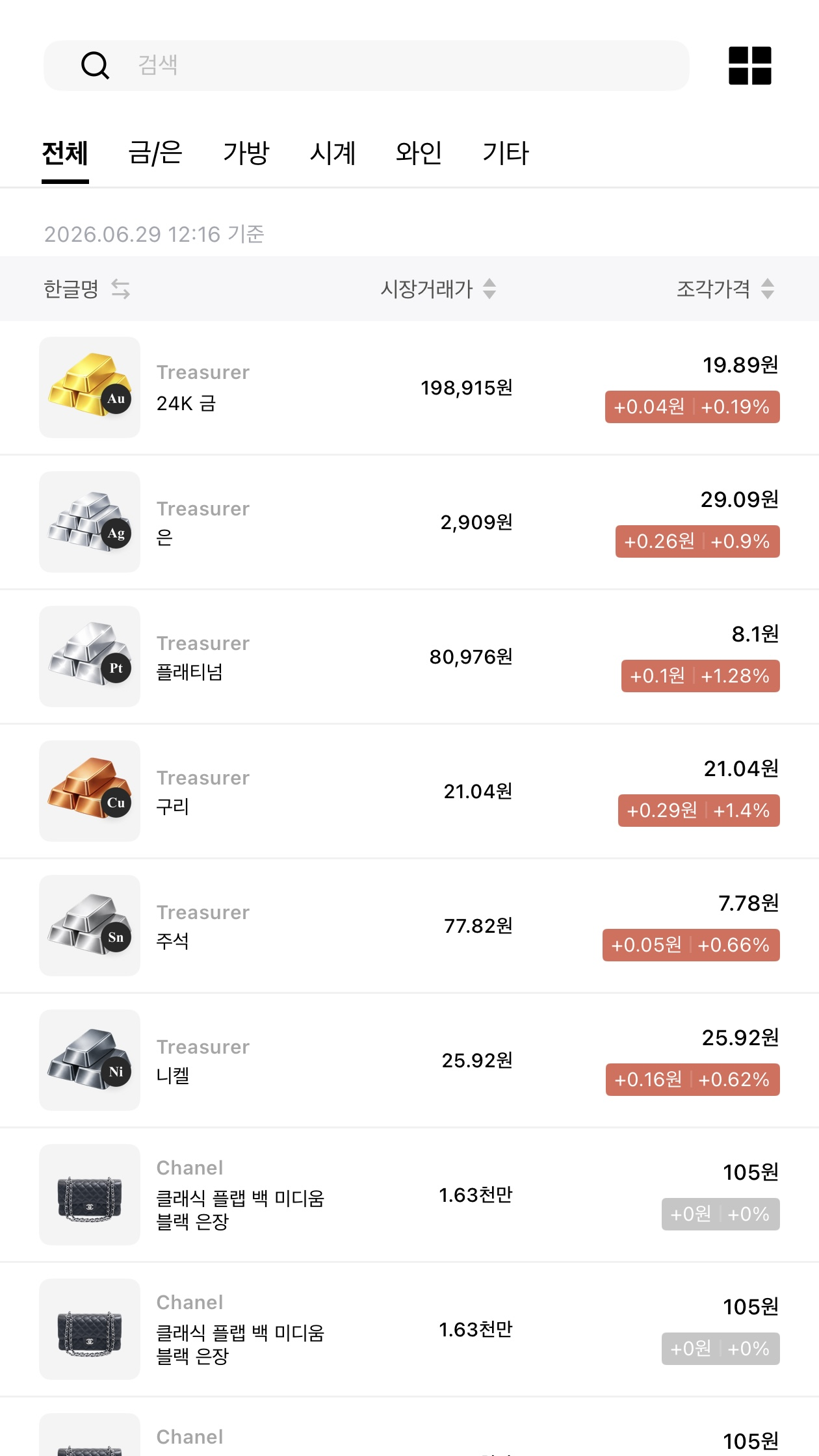
In recent years, platforms such as Treasurer have made it easier to explore high-value tangible assets without the traditional barriers to entry.
Beyond gold, silver, fine wine, and rare whisky, luxury watches have also become part of a broader conversation around collectible real-world assets, allowing more people to discover and engage with these markets in new ways.
If you've ever been interested in luxury watches or other collectible tangible assets, Treasurer offers a new way to explore them.
Final Thoughts
 Source: Sports Kyunghyang
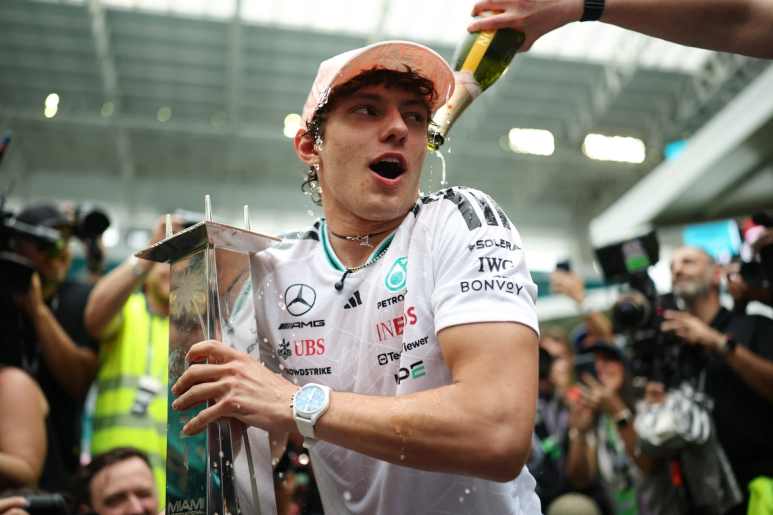
The watches worn by Formula 1 drivers are far more than fashion accessories.
They represent another kind of machine—one that embodies cutting-edge engineering, precision, and the heritage of some of the world's most prestigious watchmakers.
Over time, certain luxury watches have earned recognition for their rarity and cultural significance, becoming highly sought-after collectible assets.
Ultimately, the value of a tangible asset is determined by more than its price tag alone.
It is shaped by a combination of:
- Scarcity
- Heritage
- Technical Excellence
- Enduring Demand Over Time
These are the qualities that allow some assets to retain their appeal—and in some cases, become even more valuable—as the years pass.
At Treasurer, we'll continue exploring the fascinating world of tangible assets, from luxury watches and fine wine to rare whisky, gold, and beyond, making these stories more accessible and enjoyable for everyone.