How Far Is Insurance Responsible for AI Risks?
 Hello, this is Treasurer.
As AI becomes more deeply embedded in business operations, insurers are facing a new question:
Who is responsible when an AI system makes a wrong decision and causes financial loss?
Global reinsurance broker Gallagher Re recently launched a Digital Risk Practice covering AI liability, data centers, cyber, and other digital risks.
The reason is simple: AI-related losses can no longer be viewed as a cyber issue alone. A single technology failure may affect multiple areas of insurance, including liability, professional indemnity, property, and cyber coverage.
So what new risks do insurers need to consider in the AI era?
AI Risk Is More Than Cybersecurity
 Source: 극동대학교
When people think about AI risk, data breaches and hacking often come to mind first.
But the scope is much broader.
An AI system may make an incorrect lending or insurance decision, generate false information, misuse copyrighted material, or carry out an automated task that results in financial loss.
In other words, AI risk can develop as:
Wrong decision → Business action → Loss to a customer or third party
Gallagher Re notes that AI-related exposures can extend across cyber, liability, and professional indemnity insurance.
AI Risk May Already Be Hidden Inside Existing Policies
 Source: Linkedin
Insurers also face a less obvious problem.
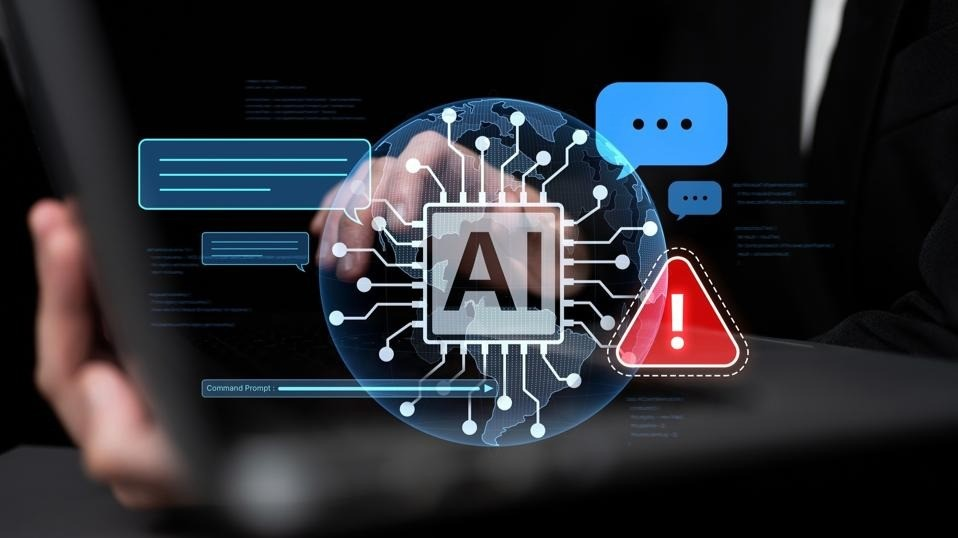
Even if a policy does not explicitly mention AI, an AI-related loss may still fall within existing coverage.
For example, an AI error in professional services could trigger professional indemnity coverage, while a data breach may fall under cyber insurance.
Gallagher Re describes this as Silent AI - AI exposure that may already exist within traditional insurance policies without being clearly identified.
This means insurers increasingly need to ask:
“How much AI-related risk are we already covering?”
One Failure Can Affect Many Companies at Once
 Source: Vinciworks
Many companies rely on the same cloud providers, software platforms, data centers, and increasingly the same AI infrastructure.
That creates accumulation risk: one failure can trigger losses across many insured companies at the same time.
The 2024 CrowdStrike outage is a useful example. A faulty software update disrupted airlines, banks, hospitals, and other businesses worldwide.
Parametrix estimated direct losses among U.S. Fortune 500 companies at around $5.4 billion, while only about 10–20% was expected to be insured.
CrowdStrike was not an AI incident, but it showed how quickly losses can spread when many companies depend on the same technology provider.
AI could create similar concentration risks.
Why Data Centers Matter to Insurers

Source: Simplilearn
AI systems depend on large-scale computing infrastructure: servers, semiconductors, electricity, networks, and data centers.
As AI adoption grows, dependence on that infrastructure grows with it.
This is why Gallagher Re’s Digital Risk Practice brings AI liability, data centers, and cyber risk together rather than treating them as separate issues.
The firm also reported that 99.1% of the $2.44 billion invested in global InsurTech companies in Q2 2026 went to AI-focused businesses.
As AI expands, the infrastructure supporting it—and the risks surrounding that infrastructure—expand as well.
Why do Reinsurers Care About this Problem?
 Source: 산아일보
Insurers are not only concerned with the probability of a single AI-related claim.
They also need to understand how many policyholders rely on the same AI model, cloud provider, or data center.
If many insured companies share the same dependency, one incident could generate claims across the portfolio at the same time.
This is where reinsurance becomes important.
Reinsurance allows insurers to transfer part of large or concentrated risks that may be difficult to absorb alone.
In the AI era, the key question is therefore not only:
“How likely is one incident?”
but also:
“How much risk is connected to the same technology?”
Insurance Contracts May Need to Change
 Source: 한국경제
As AI risk grows, insurers may need more detailed information about how companies use AI.
Do AI systems make important decisions on their own?
Is there human review?
Can the company trace what happened when something goes wrong?
These factors may increasingly affect underwriting and policy wording.
Insurance contracts may also become more explicit about whether AI-related losses are included, excluded, or subject to specific conditions.
AI is therefore not only creating new insurance products. It is also forcing insurers to reassess existing policies and hidden exposures.
Connecting Information Becomes More Important
AI liability and data-center risk are still evolving quickly.
Reinsurance professionals therefore need to track market developments, contract terms, and claims data together.
Treasurer INS does not calculate AI liability risk itself.
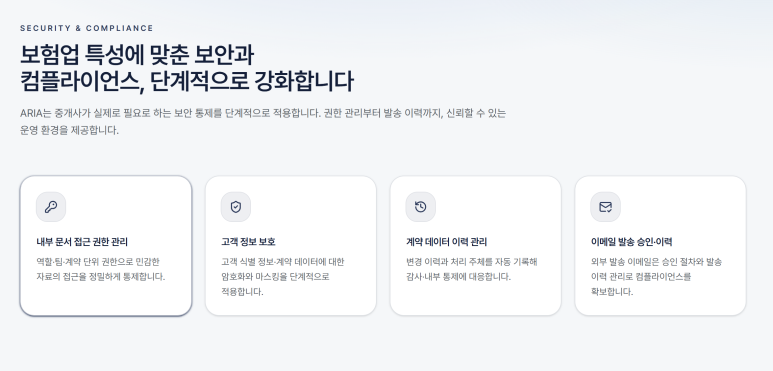
Instead, it supports reinsurance workflows by structuring contract and claims data, comparing and validating documents, and connecting market intelligence with operational information.
 As new risks emerge, the key challenge is not simply understanding the technology.
It is understanding which contracts are exposed, where losses may arise, and how those losses could spread across multiple policies.
AI is changing how companies operate.
Now the insurance industry is asking a new question:
Not only “How should we use AI?”
but “How should we insure the risks AI creates?”